

Featured articles from our Aged Care Today magazine authored by our Ageing Australia team and specialists within the aged care sector.
| This community expectations report is a vital piece of research that directly contributes to our Continuum of Ageing 2050 vision and roadmap. |
Several months on, the report continues to generate discussion across the sector, government and the broader community. It has reinforced the need for a long-term, whole-of-community conversation about ageing well.
Looking at the views of Australians aged 18 and over, one of the most striking findings was the gap between perception and experience.
While many Australians expressed uncertainty about aged care and the future of the system, confidence increased significantly among those with direct experience. Australians who had used aged care services themselves, or supported a family member through the system, reported much higher levels of trust and satisfaction than those relying on second-hand information.
This finding should give the sector, older people and the community confidence.
It suggests that while public perceptions may be influenced by historical issues or media coverage, the lived experience of many people engaging with aged care is considerably more positive. It also highlights an opportunity – and responsibility – to better communicate the realities of contemporary aged care and the significant reforms underway.
The report also reinforced something many providers see every day: Australians want to age with dignity, independence and choice.
Importantly, ageing well is not viewed solely through the lens of aged care. Respondents spoke about the importance of housing, health, social connection, financial security and community participation. They want a more integrated and person-centred system that supports people throughout their ageing journey, rather than waiting until they require formal care.
These findings strongly align with Ageing Australia’s Continuum of Ageing 2050 vision, which recognises that ageing is not a single event or service interaction, but a lifelong journey requiring coordinated support across multiple systems.
The research also challenged some commonly held assumptions.
While many Australians expressed a desire to remain in their homes as they age, there was significant openness to alternative housing options. Interest in downsizing and retirement living was stronger than many expected, particularly when these options were linked to maintaining independence, lifestyle and social connection.
This highlights an important opportunity for policymakers and our sector to think more broadly about seniors housing and the role it can play in supporting positive ageing outcomes.
Another encouraging finding was the community’s openness to innovation.
Australians generally welcomed the use of technology in aged care when it enhanced, rather than replaced, human connection. There was strong support for technology that improves safety, reduces administrative burden, supports communication and enables staff to spend more time delivering direct care.
At the same time, respondents made it clear that personal relationships remain at the heart of quality care. Technology is viewed as an enabler, not a substitute, for human interaction.
The report also explored attitudes towards informal care. While Australians overwhelmingly support helping family members and friends, there are clear limits to the level and type of care many feel comfortable providing. This reinforces the importance of recognising and supporting informal carers while ensuring access to professional services when needs become more complex.
Perhaps most importantly, the report revealed a community that is engaged, thoughtful and optimistic about the future.
Australians recognise the challenges facing aged care, including workforce shortages, affordability pressures and increasing demand. Yet there is also broad support for reform, innovation and shared responsibility between individuals and government to ensure the system remains sustainable.
Since launching the report, one message has consistently resonated with stakeholders, that understanding drives confidence.
The findings demonstrate that when Australians have greater knowledge of the sector, or direct experience with services, trust increases. This presents a significant opportunity for governments, providers and sector leaders to improve public understanding and ensure people have access to clear, practical information about ageing and aged care.
As Ageing Australia continues to repeat this research every two years, the report will provide an ongoing benchmark of community expectations and attitudes. It will help ensure policy development, service design and reform remain grounded in the views of the people the system exists to support. It forms a powerful contribution to ensuring we collectively design an ageing and aged care ecosystem in Australia that aligns with public needs at the time it is needed.
Most importantly, it reminds us that ageing well is a shared national responsibility — and that building a future-ready system begins by listening to the community.
| Reimagining ageing: Insights from the Continuum of Ageing 2050
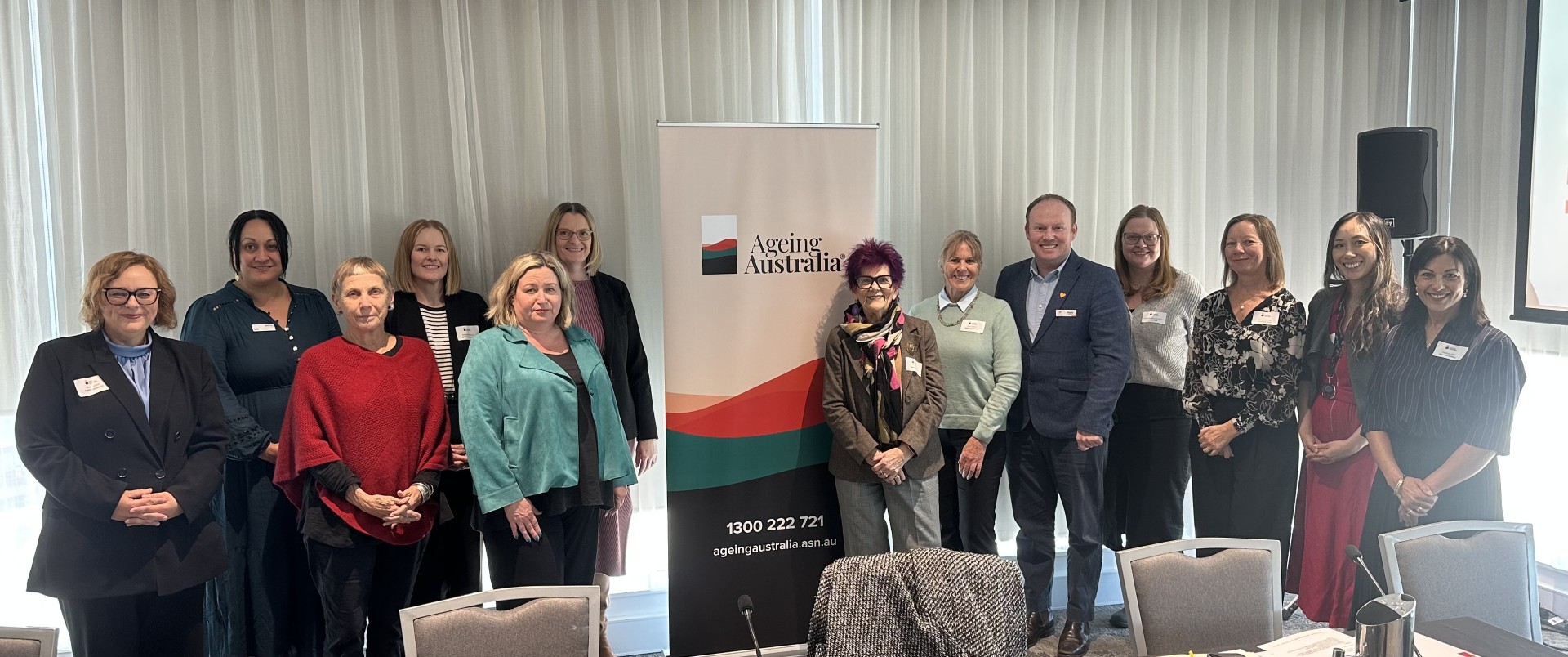
What will ageing in Australia look like in 2050, and what changes are needed today to create a better future? These are the questions at the heart of Ageing Australia’s Continuum of Ageing 2050 project, a national initiative designed to develop a long-term vision for ageing that extends beyond traditional aged care services. Over recent months, Ageing Australia has travelled across the country to host a series of member roundtables, bringing together providers, sector leaders and representatives from health, community and related sectors. So far, discussions have taken place in South Australia, Tasmania, Victoria, New South Wales and Western Australia. The conversations have been both candid and constructive, focusing on the constraints facing Australians today while exploring opportunities that will shape the future of ageing. Participants have examined key themes including integration across systems, person-directed care, healthcare and disability, technology and innovation, housing, workforce pressures, demand and supply challenges, and the impact of regulation. At the centre of the project is a simple but important principle – ageing is not a single event or service interaction. It is a lifelong journey that requires coordinated support across care, health, housing and community life. To ensure broad participation, Ageing Australia hosted a series of virtual solutions labs through June and July, enabling members to contribute their ideas and experiences. The insights gathered through these discussions help inform a courageous, evidence-based vision for ageing in Australia, one that supports older Australians to live their best lives while creating a more integrated and person-directed system for future generations. |
Anne Liddell
Head of Strategic Policy, Ageing Australia
Reach out to your state or territory manager




Australia’s leading aged services magazine distributed quarterly featuring informative articles from service providers, suppliers, innovators and thought leaders across aged the aged care sector.
To submit story suggestions, please contact the editor.