

Featured articles from our Aged Care Today magazine authored by our Ageing Australia team and specialists within the aged care sector.
However, not every reform improves the system, and not every existing program needs to be rebuilt from the ground up. Sometimes the greatest contribution we can make is taking the time to understand what already works. I believe that is the case with the Commonwealth Home Support Program (CHSP).
After more than four decades of evolution, CHSP has become a highly effective and efficient entry point into aged care for more than 800,000 older Australians.
However, discussions about reform have often focused on the wrong questions: where CHSP should sit administratively and which funding mechanism it should use. Should it remain a stand-alone program? Should it sit under the Support at Home umbrella? Should funding models change?
These are important questions. But before deciding how the system should be organised, we should first ask what we want entry-level aged care to achieve.
For Ageing Australia, the answer has become increasingly clear through our engagement with providers and other stakeholders.
Entry-level aged care is not simply a smaller version of an individual package. It serves a different purpose. It provides practical assistance before problems become crises. It maintains independence, reduces social isolation, supports carers and delivers services that many communities simply could not do without. It is preventative, community-based care that helps people remain connected to the places and people around them.
Our position has therefore been more nuanced than some of the public discussion.
We believe entry-level aged care should remain distinct from individual care packages because it serves a fundamentally different purpose. However, we are not prescriptive about whether that ultimately means a standalone program or an entry-level stream within a broader Support at Home umbrella. Our focus is on preserving the characteristics that have made CHSP successful: simple access, local flexibility, fit-for-purpose funding (including appropriate funding for thin markets), and recognition that services such as transport, meals, social support and respite cannot be funded or delivered in the same way as individual packages.
Alongside that longer-term discussion sits a more immediate priority. Providers need adequate funding while the future model is being designed. Reform cannot come at the expense of provider viability. Whatever the eventual architecture, providers must be able to continue delivering quality, accessible services to older Australians throughout the transition.
Recent reports have reinforced the importance of taking the time to get these decisions right. The Australian National Audit Office (ANAO) identified opportunities to strengthen data, planning, performance measurement and evaluation before future reforms are implemented. Similarly, the Senate Community Affairs Committee called for further consultation and evidence to inform the future of CHSP. Neither report argues against reform. Instead, they reinforce that reform should be evidence-based and thoughtfully designed.
It is also worth remembering that a senate committee report is not the final destination. While the committee recommended, amongst other things, retaining CHSP as a separate block-funded program, the additional comments from government senators highlighted the importance of ongoing consultation and careful consideration of future design.
From Ageing Australia’s perspective, the direction of that process is encouraging.
We’ve had constructive discussions with Minister Sam Rae and his office about the future of entry-level aged care. While it would be inappropriate to pre-empt those conversations, I’m pleased by the way they are progressing. Sitting together in Parliament House, the discussion was less about labels or organisational charts and more about the design principles that should underpin a system that works for older Australians, informed by the evidence emerging from both the ANAO and senate inquiry processes. My sense is that there is a genuine willingness to listen, carefully consider the evidence and work collaboratively with the sector on the future design of entry-level aged care.
Perhaps the biggest lesson from recent aged care reform is that implementation is every bit as important as policy intent. Reform delivered before the design is right, risks creating unnecessary disruption for providers and uncertainty for older people.
We have a rare opportunity to deliberately design Australia’s entry-level aged care system for the decades ahead. If we remain focused on outcomes rather than ideology, and on evidence rather than assumptions, I’m confident we can build a system that preserves what works today while evolving to meet the needs of tomorrow.
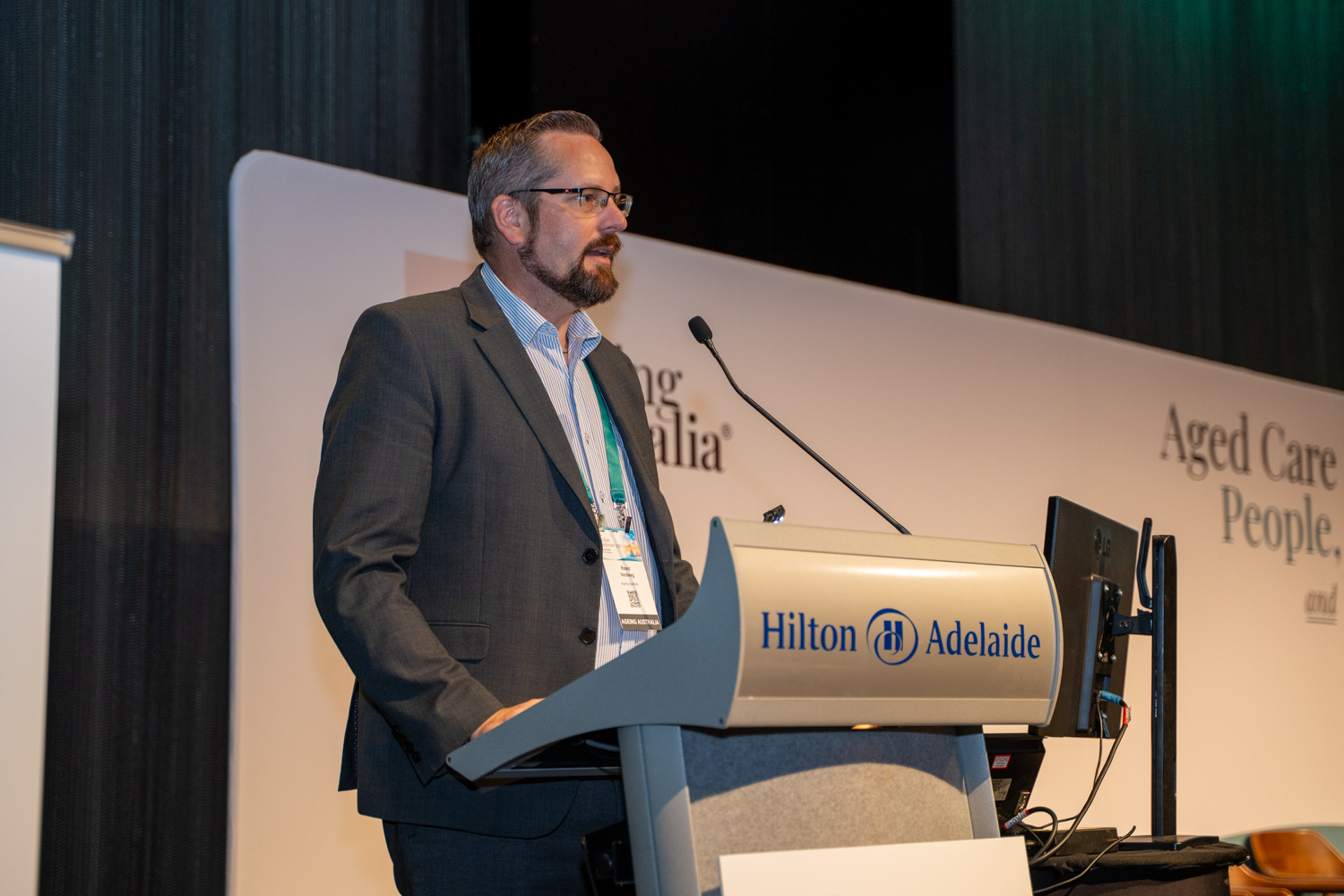
Roald Versteeg
Chief Policy & Advocacy Officer, Ageing Australia
Reach out to your state or territory manager







Australia’s leading aged services magazine distributed quarterly featuring informative articles from service providers, suppliers, innovators and thought leaders across aged the aged care sector.
To submit story suggestions, please contact the editor.